
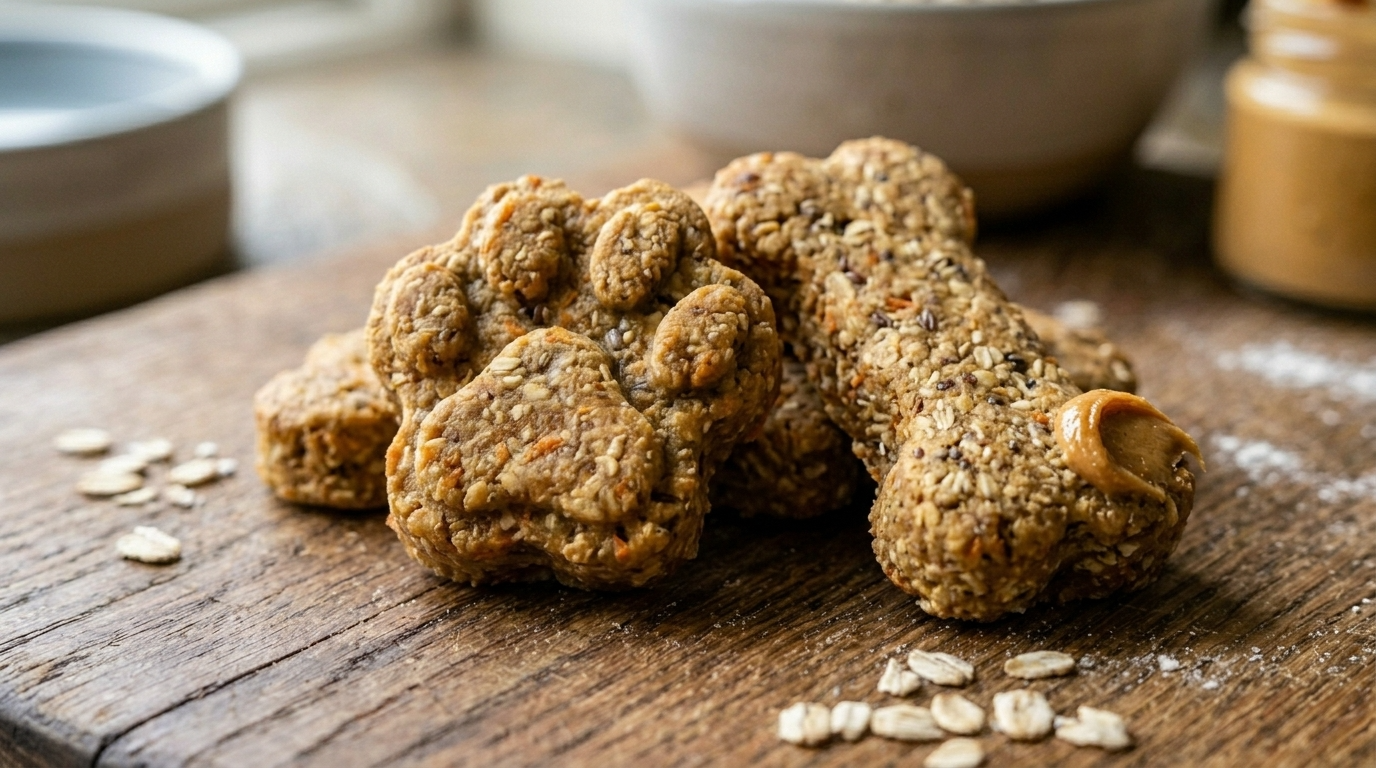
Easy Baked Dog Treat Recipes Your Pup Will Love
Last Tuesday, my golden retriever sat by the oven, tail wagging in anticipation. The warm scent filling our kitchen was exciting. There’s something special about sharing moments with our furry friends.

Want to spoil your pet? Start with easy baked dog treat recipes. These recipes use simple, familiar ingredients from your pantry. Choosing natural dog treats means you control what your pet eats every day.
Making homemade dog treats keeps your pet away from hidden additives in store-bought snacks. Remember, these treats should be a healthy reward, not a meal replacement. A bit of kitchen time can make your pet’s day brighter.
Why Homemade Baked Dog Treats Are Worth Making
Starting your dog’s nutrition journey in your kitchen is a great idea. Making homemade dog treats lets you control every part of their snack.
How homemade treats let you control ingredients
Many store-bought snacks have fillers, preservatives, or too much salt. Baking at home means your dog gets only wholesome, high-quality nutrition. You can change ingredients to meet your dog’s health needs or allergies.
Why baking treats can be more budget-friendly
Many think baking is pricey, but it’s often cheaper than buying specialty snacks. You probably have pantry staples like flour, oats, or peanut butter. With easy baked dog treat recipes, you can:
- Use bulk ingredients to save money.
- Go to the pet store less often.
- Use up leftover fruits and veggies.
- Make big batches that last for weeks.
How to adjust recipes for your dog’s preferences
Every dog is different, with their own tastes. Homemade baking lets you change treats’ texture and size. For seniors, make softer bites. For active dogs, small, crunchy pieces are great for training.
Try different flavors to see what your dog loves most. Whether it’s savory chicken or sweet pumpkin, you can make easy baked dog treat recipes just right. This makes snack time a special bonding experience for both of you.
Essential Ingredients for Simple Dog Biscuit Recipes
Making natural dog treats is a great way to show your dog love. When you make simple dog biscuit recipes at home, you control every ingredient.

Whole-grain flours and grain-free alternatives
Start with a good flour for your dough. Whole-wheat flour is common, but oat flour is gentler.
For dogs with sensitivities, try coconut or brown rice flour. These options are healthy and won’t upset their stomachs.
Dog-friendly fruits, vegetables, and proteins
Fresh produce makes your snacks better. Pumpkin puree and mashed sweet potatoes are great binders that dogs love.
Lean, cooked proteins like shredded chicken or ground turkey are good too. Make sure these proteins are fully cooked and without seasonings or oils.
Natural flavor boosters your dog can safely enjoy
A bit of extra flavor makes snacks more fun for your pet. Fresh parsley can freshen their breath, and a little cinnamon adds a nice aroma.
When using peanut butter or broth, always check the labels. Make sure there are no harmful additives or preservatives.
Ingredients to avoid include xylitol, chocolate, onions, and raisins
When making organic dog treats, safety is key. Avoid xylitol, a sweetener in many sugar-free products.
Chocolate, onions, garlic, and raisins are toxic to dogs. Never use them in your recipes. If unsure about an ingredient, consult your veterinarian first.
Kitchen Tools and Baking Tips for Better Results
Getting great results with dog treats starts with the right tools. When making simple dog biscuit recipes, the right equipment makes things easier and faster.
Useful tools for mixing, rolling, and cutting dough
You’ll need some basic kitchen items to start. A big mixing bowl, a strong rolling pin, and measuring cups are key for making dough right.
Using parchment paper on your baking sheet stops treats from sticking. It also makes cleaning up easy. Plus, fun cookie cutters can make baking delightfully rewarding for you and your dog.

How to create evenly sized treats
When making quick dog treat ideas for training, being consistent is important. Roll your dough evenly so all treats bake the same.
Using a ruler or special rolling pin rings helps you get this right. Uniform treats mean no burnt or undercooked ones.
Why oven temperature and baking time matter
The oven’s heat affects your treats’ texture. Lower heat for longer makes them crunchier, good for teeth.
Higher heat might make the center soft. Since ovens vary, always watch closely in the last baking minutes to avoid over-browning.
How to cool and crisp treats before storing them
Take the tray out of the oven and put treats on a wire rack right away. This lets air get under them, making them perfectly crisp.
Let them cool fully before storing. Storing warm treats can cause moisture and spoilage, wasting your effort.
Easy Baked Dog Treat Recipes to Try at Home
Making your own dog snacks is fun and healthy. You can give your dog natural dog treats without artificial preservatives. These recipes are simple, so you can spend more time with your dog.

Peanut Butter and Oat Dog Biscuits
Ingredients and safe peanut butter choices
Start with rolled oats, flour, and peanut butter. Make sure your peanut butter is xylitol-free to keep your dog safe.
Mixing, shaping, and baking instructions
Make a stiff dough with the ingredients. Roll it out and use cookie cutters for fun shapes.
Best ways to serve and store these treats
Bake at 350°F until they’re golden. Store them in an airtight container for up to two weeks.
Pumpkin Cinnamon Dog Cookies
Ingredients for a soft, fiber-rich treat
Use pureed pumpkin, oat flour, and cinnamon. This mix is gentle and fiber-rich.
How to prepare and bake the cookies
Drop spoonfuls onto a parchment-lined tray. Bake until the edges are firm, but the center is soft.
Serving suggestions for everyday rewards
These cookies are great for daily rewards. They have a warm flavor dogs love.
Sweet Potato and Oatmeal Dog Treats
How to prepare fresh or canned sweet potato
Use cooked, mashed sweet potato for best results. Make sure canned sweet potato is plain and has no added sugars.
Steps for making a soft, chewy texture
Mix the potato with oatmeal and a bit of water. This makes a chewy dough that dogs enjoy.
How to make smaller treats for training
Roll the dough into tiny balls or cut into small squares. These are perfect for training.
Apple and Cheddar Canine Cookies
Preparing apples safely for dogs
Remove the core and seeds from apples before grating. Apple seeds have cyanide, which is harmful.
Combining apple and cheddar without overloading the dough
Add a small amount of shredded cheddar cheese. It balances the apple’s sweetness well.
Baking tips for crisp edges and a tender center
Bake at a moderate temperature. Watch them closely to prevent the cheese from burning while the edges crisp.
Banana and Coconut Bites
Choosing unsweetened coconut and ripe bananas
Use very ripe bananas for sweetness. Choose unsweetened coconut to avoid additives.
How to shape bite-sized treats
Form the dough into small, uniform bites. They’re perfect for quick rewards.
How to prevent excess moisture during baking
Bake at a lower temperature for a longer time. This dries out the treats and prevents sogginess.
Chicken and Parsley Savory Dog Biscuits
Using cooked chicken safely in homemade dog treats
Make sure your chicken is fully cooked and shredded finely. Avoid using onion or garlic powder, as they’re dangerous.
Preparing a savory dough with fresh parsley
Mix the chicken with flour and finely chopped parsley. Parsley freshens your dog’s breath.
How to bake and refrigerate protein-rich biscuits
Bake until firm and dry. Store them in the fridge to keep them fresh.
Carrot and Applesauce Natural Dog Treats
Preparing carrots and unsweetened applesauce
Grate fresh carrots for even cooking. Use unsweetened applesauce to keep these natural dog treats healthy.
How to make a smooth, easy-to-roll dough
Combine the ingredients until smooth. Add extra flour if it’s too sticky.
Adjusting baking time for crunchy or soft treats
For crunchier biscuits, bake a few extra minutes. For softer treats, remove them when set.
Blueberry and Yogurt Dog Cookies
Selecting plain, unsweetened yogurt
Choose plain, unsweetened Greek yogurt for protein. Avoid flavored yogurts with artificial sweeteners.
How to fold blueberries into the dough
Gently fold fresh or frozen blueberries into the dough. Be careful not to crush them too much.
Cooling and storing fruit-filled treats
Let these canine cookie recipes cool completely. Store them in the fridge to keep them fresh.
Peanut Butter-Based Treats for Dogs Who Love Rich Flavor
Many dogs love the taste of peanut butter in their snacks. It’s a favorite for making diy dog treats at home. The creamy ingredient is loved for its nutty flavor.

How to choose dog-safe peanut butter
Before mixing your dough, check the peanut butter label. Look for a list with only peanuts or a bit of salt.
Stay away from peanut butter with xylitol. It’s toxic to dogs. Also, avoid brands with added sugars, palm oil, or preservatives.
Ways to keep peanut butter treats moderate in calories
Peanut butter is very calorie-dense. To keep your homemade dog treats healthy, use it as a flavor accent.
Add fiber-rich or low-calorie ingredients to balance the recipe. Think about adding:
- Rolled oats for texture and fiber
- Pureed pumpkin or sweet potato for moisture
- Finely grated carrots or zucchini
- Whole-wheat or oat flour to bind
Easy substitutions for dogs with peanut allergies
If your dog has a peanut allergy, don’t worry. There are safe alternatives for baking.
Sunflower seed butter is a good choice. It’s similar to peanut butter. Always check with your vet before trying new ingredients.
Healthy Dog Snacks for Training and Everyday Rewards
Keeping your dog motivated during training doesn’t mean overfeeding them. Choose the right healthy dog snacks for rewards. This way, you can give your pup treats often without worrying about their weight.
How to make treats small enough for training
When teaching a new trick, you might need many rewards. Break your homemade biscuits into tiny pieces, like peas. This lets you give constant positive reinforcement without too many calories.
Choosing lower-calorie ingredients
For quick dog treat ideas, pick light ingredients. Carrots, green beans, or cucumber slices are great. You can also add these to your baking to keep your dog happy without extra fat or sugar.
How homemade treats fit into your dog’s daily diet
Remember, every treat adds to your dog’s daily calories. Treats should be no more than 10% of their daily food. Always adjust their main meal portions if you’ve given lots of treats during training.
When to ask your veterinarian about dietary restrictions
Before trying new snacks, talk to your vet, especially if your dog has allergies or health issues. Your vet can tell you which ingredients are safe for your pet. This helps your healthy dog snacks support their health, not harm it.
How to Adapt DIY Dog Treats for Special Diets
Every dog has special needs for food. You can make diy dog treats that fit their health goals. Always talk to your vet before changing your dog’s diet, especially if they have health issues.
Grain-free substitutions using oat, rice, or coconut flour
If your dog can’t have wheat, try using oat, rice, or coconut flour instead. Oat flour makes treats chewy. Rice flour makes them light and crunchy. Coconut flour soaks up a lot of liquid, so add more water to your mix.
- Use oat flour for a fiber-rich, satisfying crunch.
- Try rice flour for a gentle, easily digestible option.
- Mix in coconut flour carefully, as it absorbs moisture rapidly.
- Adjust liquid ratios to maintain the perfect dough consistency.
Ingredient swaps for dogs with food sensitivities
Many healthy dog snacks can be made without common allergens like beef, dairy, or soy. Use cooked lentils or chickpeas for a plant-based option. Choose organic dog treats for the best quality.
Making softer treats for senior dogs
Older dogs may have trouble with hard treats. Add moisture with pureed fruits or veggies like pumpkin and applesauce. Baking for a shorter time keeps the treats soft and easy to chew.
Reducing fat, sodium, and sugar in homemade recipes
You don’t need extra ingredients for tasty treats. Use natural flavors like cinnamon, parsley, or blueberries instead of salt or sugar. Choose lean proteins and avoid extra fats for healthy dog snacks that taste great.
Baking and Food Safety Rules for Homemade Dog Treats
Baking natural dog treats at home is fun, but you must follow safety rules. Keeping your kitchen clean is key to your dog’s health. By following these tips, you can be sure your dog’s treats are safe.
Why you should use cooked meat and pasteurized dairy
Always cook animal proteins fully. Raw meat can have Salmonella or E. coli, which are bad for you and your pet. Use only pasteurized dairy to avoid contamination.
Preventing cross-contamination in your kitchen
Cleanliness is essential when making dog treats. Wash your hands, cutting boards, and utensils well before and after use. Use separate areas for pet food to keep your kitchen clean.
Recognizing unsafe ingredients before mixing the dough
Check every item on your counter before mixing. Foods like xylitol, grapes, onions, or chocolate are toxic to dogs. Make sure all ingredients are safe for dogs by checking with a vet.
How to introduce new treats gradually
Even with healthy ingredients, introduce new treats slowly. Give a small piece first to watch for any issues. This gradual approach helps avoid upset stomachs or allergies. If you’re unsure, talk to your vet for advice.
How to Store Tasty Pet Treats for Freshness
Keeping your dog’s homemade dog treats fresh is key. Let them cool completely on a wire rack before storing. This step stops moisture buildup, which can make treats soggy and spoil early.
When to use an airtight container at room temperature
For crunchy, dry biscuits, an airtight container is great. Store them in a cool, dry spot, away from sunlight. This keeps them crisp for days, especially if they don’t have fresh meat or dairy.
When refrigeration is the better choice
Refrigerate treats with fresh meat, cheese, or high moisture. These can spoil fast at room temperature. Use a sealed bag or container to keep them fresh and prevent odors.
Freezing homemade treats for longer storage
Freezing is perfect for big batches. Portion your homemade dog treats into small bags and freeze. Thaw a few at room temperature or in the microwave for a quick snack.
Signs that baked treats should be discarded
Check your snacks before giving them to your dog. Always discard any with mold or a sour smell. If they’re slimy or soft, it’s best to throw them away for your dog’s safety.
Serving Ideas and Portion Tips for Every Pup
It’s important to give your dog the right amount of homemade treats. This helps keep them healthy and happy. You want to make sure they get the best from the treats you make.
Matching treat size to your dog’s breed and weight
When you give treats to your dog, size is key. You need to make sure the treats fit your dog’s needs:
- Small breeds: Cut big biscuits into small pieces to avoid choking and control calories.
- Large breeds: Give them big chews to help them chew healthily.
- Senior dogs: Give them soft treats that are easy on their teeth and gums.
Using homemade biscuits as training rewards
Training is a great time to use tasty pet treats. Since training needs lots of practice, keep the treats small.
Small pieces or crumbs let you reward your dog often without overfeeding. This keeps them eager to learn new things.
Adding treats to enrichment toys and special occasions
Homemade treats can make your dog’s day better in many ways. Stuffing a toy with a biscuit piece keeps them busy and happy.
These tasty pet treats are also great for special days like birthdays. But remember, these should be rare to keep their diet balanced.
Keeping treats within the recommended daily calorie allowance
Treats should never be a full meal. Keep track of them to avoid weight gain.
Every dog is different, so talk to your vet about the right calorie amount. This way, your healthy dog snacks stay a good thing for your dog.
Conclusion
Making your own pet snacks lets you control what goes into them. You can give your pets the best nutrition without hidden additives.
Learning to make easy dog treats means you can tailor them to your pet’s health needs. Simple, healthy ingredients make treats your dog will love.
Remember to keep your pets safe by avoiding toxic foods and making sure your oven is hot enough. Storing your treats properly keeps them fresh. Also, give your pets the right amount to keep their diet balanced.
Start by trying one of these dog treat recipes this weekend. See how your dog likes the fresh tastes and textures of homemade treats.
Change your recipes based on what your pet likes best. Baking treats for your dog is a great way to show them love with healthy, homemade goodies.


