
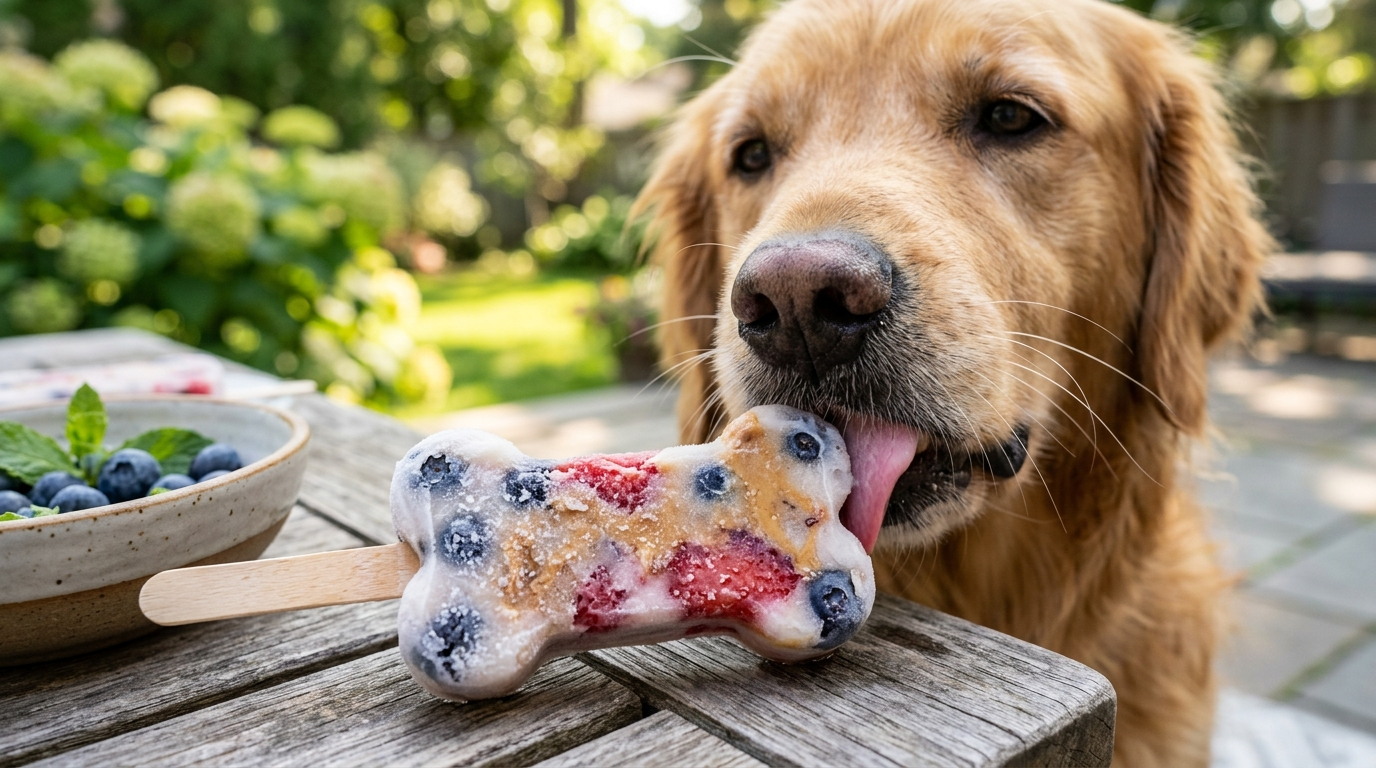
Frozen Dog Treat Recipes for Hot Summer Days to Keep Dogs Cool
Last July, my golden retriever, Cooper, was panting a lot on the porch. I knew he needed more than water to stay cool. That’s when I started making frozen dog treat recipes for hot summer days for him.

These treats are a fantastic way to keep your dog cool when it’s hot. But remember, they’re just a snack. They can’t replace fresh water, shade, or air conditioning.
If your dog shows signs of heat exhaustion, talk to your vet right away. In this guide, we’ll cover homemade snacks, safe ingredients, and how much to give. You’ll also learn how to prepare and store them to keep your dog happy and safe all summer.
Frozen Dog Treat Recipes for Hot Summer Days
Preparing frozen dog treat recipes for hot summer days is a great way to spoil your furry friend. These icy snacks give a cool break from the heat. Watching your pup enjoy a cool treat is one of the best parts of summer.
What These Homemade Dog Treats Can and Cannot Do
These snacks are fun but not a cure for heatstroke. They help your dog stay hydrated in the heat. But, they can’t replace vet care if your dog overheats.
Think of these recipes as a supplemental way to provide comfort. They offer a tasty distraction that keeps your dog happy indoors or in the shade. Always put your dog’s health first.
How Frozen Treats Fit Into Your Dog’s Summer Cooling Routine
These treats are just one part of keeping your pet safe in summer. A good cooling routine includes several key habits. Make sure to include these in your daily routine:
- Always provide access to fresh, cool water throughout the day.
- Ensure your dog has a comfortable, shaded area to rest away from direct sunlight.
- Utilize air conditioning or fans to keep indoor environments at a safe temperature.
- Limit intense exercise to the early morning or late evening hours when the air is cooler.
Choosing Treat Sizes for Small, Medium, and Large Dogs
Choosing the right treat size is crucial to avoid accidents. A treat that’s good for a big dog could be a serious choking hazard for a small one. Adjust your mold sizes based on your dog’s size and eating habits.
When making your frozen dog treat recipes for hot summer days, remember these tips:
- Small Dogs: Use mini ice cube trays for bite-sized portions that are easy to chew.
- Medium Dogs: Standard ice cube trays or medium-sized silicone molds are good for most breeds.
- Large Dogs: Use larger molds or even muffin tins for bigger treats that last longer.
Always watch your dog the first time they try a new frozen snack. If they gulp their food, choose larger sizes. Safety is the key to making these summer treats a positive experience for everyone.
Gather Dog-Safe Ingredients and Supplies
Making healthy, frozen snacks for your dog starts with picking safe ingredients. Having a well-stocked kitchen makes making homemade dog treats fun and easy for you and your dog.
Dog-Friendly Ingredients to Keep on Hand
Always choose safe and nutritious ingredients for your recipes. Keep a variety of staples ready in your pantry and fridge. This way, you can make a batch quickly when it gets hot.
- Plain yogurt: A creamy base that is excellent for digestion.
- Banana: Provides natural sweetness and potassium.
- Pumpkin: A fiber-rich addition that dogs love.
- Low-sodium broth: A savory liquid base that adds great flavor.
Produce, Liquids, and Bases That Freeze Well
Fresh produce adds crunch and vitamins to your homemade dog treats. Fruits and veggies with lots of water help keep your dog hydrated in summer.
Think about adding these to your recipes:
- Watermelon: Hydrating and naturally sweet.
- Blueberries and Strawberries: Packed with antioxidants.
- Apples: A crisp, healthy snack (ensure seeds are removed).
- Carrots: Perfect for adding a satisfying texture.
Silicone Molds, Ice Cube Trays, and Freezer Containers
The right tools make freezing snacks easier. Silicone molds are best because they let you easily pop out treats. Unlike hard plastic trays.
Also, keep airtight freezer containers for storing your treats. This keeps them fresh and prevents bad smells from getting in.
How to Select a Safe Treat Size and Shape
Picking the right treat size is key for your dog’s safety. Match the mold size to your dog’s breed and chewing habits to avoid choking.
For small dogs, use tiny molds. For bigger dogs, choose slightly larger shapes. But make sure they’re still small and safe to eat.
Prepare Your Kitchen and Your Dog’s Treat Portions
Making diy dog treats needs a clean kitchen and careful prep. Clear your counters and make sure you have enough space. A clean workspace helps you make better treats for your dog.
Step-by-Step: Wash, Peel, and Remove Unsafe Seeds or Pits
Begin by washing all fresh produce under cool water. This removes dirt and pesticides. Peel fruits like bananas and oranges, and remove tough rinds or stems.
Always core apples and remove seeds or pits. These can be toxic to dogs.
Step-by-Step: Blend or Mash Ingredients to the Right Texture
After cleaning, blend or mash the produce. A smooth puree is good for small molds. A chunkier mash is better for larger treats.
Adjusting the texture is key. It matters for puppies, senior dogs, or those with dental issues.
Step-by-Step: Portion Mixtures Without Creating Choking Hazards
Fill molds with the right size for your dog. Smaller treats are safer for small breeds and help control calories. This way, your pet can enjoy their snack safely.
Preventing Cross-Contamination From Human Foods
Keeping your kitchen clean is crucial when making snacks. Follow these tips to keep your pet’s food safe:
- Use dedicated bowls and utensils that are free from human food residue.
- Clean your preparation surfaces thoroughly before starting your batch.
- Avoid using ingredients that have been exposed to onions, garlic, or xylitol.
- Store your finished treats in airtight containers away from human food items.
By following these steps, you make sure every batch of homemade dog treats is safe and tasty. These precautions let you enjoy making healthy snacks for your dog without worry.
Make Frozen Peanut Butter and Banana Bites
Start with this simple recipe for easy dog treat recipes. These snacks cool your pup down in summer. They are creamy, tasty, and easy to make at home.

Step-by-Step: Combine Banana, Plain Yogurt, and Xylitol-Free Peanut Butter
Mash one ripe banana in a bowl until smooth. Add half a cup of plain yogurt and two tablespoons of xylitol-free peanut butter. Stir well until everything mixes into a smooth mix.
Step-by-Step: Fill Small Molds and Freeze Until Firm
Spoon the mix into small silicone molds for bite-sized treats. Put the molds on a tray to freeze. Freeze for at least four hours or until firm.
How to Adjust the Recipe for Sensitive Stomachs
If your dog’s stomach is sensitive, start with a small amount. You can use less peanut butter or choose lactose-free yogurt. Always watch your dog’s reaction to new foods.
Ingredient Safety: Checking Peanut Butter Labels for Xylitol
Check the peanut butter label for xylitol before starting. Xylitol is toxic to dogs and can cause serious health problems. Use only natural peanut butter without added sweeteners.
Serving Suggestions for Training Rewards and Cooling Breaks
These frozen bites are great for training rewards in the shade. Use them sparingly as treats, not meals. Keep your pup happy and healthy by balancing these treats with regular food.
Blend Refreshing Watermelon and Yogurt Pops
Want to give your pup a special treat? Try making these refreshing dog treats. Watermelon is hydrating and low-calorie, making it great for summer snacks.
Step-by-Step: Remove Watermelon Rind and Seeds
First, prepare the fruit carefully. Use a sharp knife to remove the thick green rind. It’s hard for dogs to digest and can cause blockages.
Then, scoop out all the black seeds. While a stray seed is okay, too many can be risky. So, clean the fruit well for safety.
Step-by-Step: Blend Watermelon With Plain Yogurt or Water
After cleaning, blend the red watermelon chunks. Add plain, unsweetened yogurt for creaminess, or water for a lighter treat.
Pulse until smooth and pourable. This makes pup-friendly frozen treats that are healthy and tasty.
How to Layer the Mixture for Colorful Summer Dog Treats
Layer your ingredients for pretty snacks. Pour watermelon puree into molds and freeze for thirty minutes.
Then, add a yogurt layer on top. Repeat for a colorful, tasty treat.
Why Portion Control Matters With Watermelon
Watermelon is healthy but has natural sugars. Moderation is key to keep your dog’s diet balanced.
Give these treats as rewards, not meals. Watch your dog to make sure they like the fruit.
How to Store Pops Without Freezer Burn
To keep treats fresh, freeze them fully and then remove from molds. Store in an airtight bag or container.
This stops ice crystals from forming. Proper storage keeps your homemade creations tasty and safe for your dog all season.
Freeze Pumpkin and Chicken Broth Treats
Savory frozen snacks are great for keeping your pup cool and happy. These healthy dog treats are a nice change from sweet treats. Dogs love the savory taste.

Step-by-Step: Mix Plain Pumpkin With Low-Sodium Chicken Broth
Start with plain canned pumpkin puree. Make sure it only says pumpkin on the label. Avoid pie fillings with added sugars or spices.
Mix the pumpkin with low-sodium chicken broth until it’s smooth. You can adjust the mix to your dog’s liking. A 1:1 ratio works well for a firm treat.
Step-by-Step: Pour the Mixture Into Treat Molds
Pour the mix into silicone molds for easy removal. Use a small funnel or squeeze bottle to avoid spills.
- Place the molds on a flat baking sheet for stability.
- Fill each cavity nearly to the top, leaving a tiny bit of room for expansion.
- Freeze for at least four hours or until the treats are completely solid.
How to Use These Savory Frozen Dog Treats as Enrichment
These savory cubes are great for keeping your dog’s mind active. Hide them in puzzle toys or use them during training.
These healthy dog treats should not replace your dog’s regular meals. They’re perfect for a fun game on a hot day.
Checking Broth Labels for Onion, Garlic, and Excess Sodium
Always check the chicken broth ingredients. Many broths have onion or garlic, which are toxic to dogs.
Choose “low-sodium” or “no salt added” broths to keep your dog’s heart healthy. Too much salt can cause dehydration, which is bad in the summer.
When Pumpkin May Support Digestive Regularity
Pumpkin is full of fiber, which helps with digestion. It can help with occasional tummy troubles.
Introduce new foods slowly to see how your dog reacts. When made right, these healthy dog treats are both tasty and useful.
Make Berry, Apple, and Carrot Frozen Dog Treats
Want to make easy dog treat recipes? Start with berries and carrots. They’re full of vitamins and taste great on a hot day.
Step-by-Step: Prepare Blueberries, Strawberries, Apples, and Carrots
First, wash all your fruits and veggies well. Remove the green tops from strawberries and the skin from carrots. This makes sure your dog only gets the best.
Step-by-Step: Blend the Produce With Water or Plain Yogurt
After prepping, blend everything into a smooth mix. Use water for a light treat or yogurt for a creamy, protein-rich snack. You can change it up to see what your dog likes best.
How to Create Crunchier Frozen Treats With Small Fruit Pieces
For a crunchy treat, chop some extra blueberries or carrot bits. Mix them in before freezing. This adds a fun crunch to snack time.
Remove Apple Seeds, Stems, and Cores Before Blending
When making treats, safety first. Take out apple seeds, stems, and cores. Check your fruit well before blending to avoid any harm.
Introduce New Fruits Gradually to Watch for Reactions
Introduce new fruits slowly. Watch your dog for any signs of upset or allergies. Be patient as you try new things with these easy dog treat recipes.
Try Simple Frozen Broth Cubes and Stuffed Toy Treats
You can make your dog’s snack time better with simple broth cubes and fun toys. These diy dog treats are great for those who want quick, healthy snacks without a lot of work.

Freeze Plain, Low-Sodium Bone Broth or Chicken Broth
Making broth cubes is a great way to keep your dog hydrated. Just pour low-sodium bone broth or chicken broth into an ice cube tray and freeze it.
These cubes are a refreshing treat after a walk. They are easy on most stomachs and taste great to dogs.
Fill a Food-Grade Toy With Yogurt and Mashed Banana
Try stuffing a tough, food-grade rubber toy with yogurt and mashed banana. Then, freeze it for a few hours.
This turns the toy into a challenging puzzle for your dog. It’s a great way to keep a high-energy dog calm in the afternoon.
How to Combine Frozen Treats With Mental Enrichment
Food and play together are great for your dog’s brain. When your dog works to get a treat, they use their brain, just like they do with exercise.
Choosing Durable Toys for Your Dog’s Chewing Style
Choose a toy that fits your dog’s chewing style. If your dog loves to chew, pick heavy-duty rubber toys that can handle it.
Supervising Your Dog While Enjoying a Stuffed Frozen Toy
Always watch your dog with these snacks. Make sure they don’t swallow big pieces of rubber.
If the toy looks worn or damaged, take it away right away. Safe diy dog treats keep your pet happy and healthy all summer.
Serve Healthy Frozen Treats Safely on Hot Days
Giving your dog a frozen treat is a great way to beat the heat. But safety must come first. These snacks provide relief, but always prioritize your pet’s well-being during the warmest months.
Step-by-Step: Offer One Small Portion and Observe Your Dog
Start with a very small portion of refreshing dog treats. This lets you watch how your dog reacts. It’s important to monitor the temperature and ingredients.
Watch for any signs of digestive upset or discomfort after the first serving. If your dog handles the snack well, you can gradually adjust the portion size. This should be based on their body weight and overall tolerance.
How to Prevent Choking, Tooth Damage, and Fast Eating
Fast eaters often gulp down snacks without chewing. This can lead to choking hazards. To keep your summer dog treats safe, consider these strategies:
- Use silicone molds to create smaller, bite-sized portions.
- Place the treat inside a durable, food-grade rubber toy to slow down consumption.
- Avoid freezing items that are too hard, as these can potentially crack a dog’s tooth.
- Always supervise your pet while they enjoy their frozen snack to ensure they are chewing properly.
Why Fresh Water, Shade, and Air Conditioning Still Matter
Frozen snacks are just a supplement to your dog’s cooling routine. They should never replace the fundamental needs of your pet during a heatwave.
Always ensure your dog has access to plenty of fresh, cool water throughout the day. Keep them in shaded areas or air-conditioned rooms whenever the outdoor temperature climbs to dangerous levels.
Signs Your Dog May Be Overheating
Even with the best precautions, heat exhaustion can happen quickly. Keep a close eye on your dog for these common warning signs:
- Excessive or heavy panting.
- Bright red, purple, or blue gums.
- Drooling thick, sticky saliva.
- Lethargy or difficulty standing up.
When to Contact a Veterinarian for Heat-Related Symptoms
If you notice any of the symptoms listed above, you must act immediately. Prompt veterinary attention is vital if your dog shows signs of confusion, vomiting, or collapse.
Do not wait for the symptoms to pass on their own. Contact your local animal hospital right away. Get professional guidance and ensure your dog receives the care they need to recover safely.
Adapt Easy Dog Treat Recipes to Your Dog’s Needs
Customizing your homemade snacks makes sure every pup has a safe and tasty time. You can change healthy dog treats to meet their health needs or dietary sensitivities. Even small changes can greatly improve your pet’s health.

Lower-Calorie Options for Dogs Managing Their Weight
If your dog needs to lose weight, you can still give them tasty snacks. Use water-based mixtures instead of high-calorie ingredients like peanut butter or yogurt. Also, use less sweet ingredients like bananas or berries to keep sugar low.
It’s very important to control how much your dog eats. Use small molds for treats. This way, your dog gets a good snack without too many calories.
Dairy-Free Alternatives for Dogs With Sensitive Digestion
Many dogs can’t handle lactose, which can upset their stomach. You can replace dairy yogurt with coconut water or pureed veggies. These options add flavor and hydration without upsetting their stomach.
Ingredient Changes for Dogs With Food Allergies
Make sure the ingredients you choose are safe for your dog. If your dog is allergic to certain proteins or fruits, find vet-approved substitutes. Planning carefully keeps your homemade snacks safe and fun for your dog.
How to Account for Treat Calories in Daily Meals
Treats should not make up more than ten percent of your dog’s daily calories. When making healthy dog treats, subtract those calories from their main meals. This keeps their weight stable and prevents overeating.
Why Your Veterinarian Should Guide Therapeutic Diet Changes
If your dog needs a special diet or has ongoing health issues, talk to your vet before making changes. A vet can tell you which ingredients are safe and which to avoid. Your vet’s advice is key to making sure your homemade treats are good for your dog’s health.
Freeze, Store, and Serve Your Summer Dog Treats
After making your pup-friendly frozen treats, it’s time to store them right. This keeps your homemade summer dog treats fresh and yummy for a long time.
Step-by-Step: Label Each Batch With Ingredients and Date
Keeping your freezer tidy is important. Use a permanent marker to label each bag or container. Write down the ingredients and the date you made them.
This makes safe rotation easy. You’ll always know what your dog is eating and how long it’s been stored.
How Long Homemade Frozen Treats Keep Their Quality
Homemade snacks stay fresh for up to a month in the freezer. They might be safe longer, but the taste and texture start to go down after four weeks.
Use airtight freezer-safe containers or heavy-duty bags to keep them fresh. Getting rid of air helps stop ice crystals from forming on your treats.
Thawing Treats Slightly for Dogs With Sensitive Teeth
Some dogs might find frozen treats too hard or cold. If your dog seems unsure, let the treat sit at room temperature for five to ten minutes before giving it to them.
This slight thaw makes the treat softer. It’s easier for your dog to eat. Always watch your pet while they eat to make sure they’re okay.
Discarding Treats With Freezer Burn, Spoilage, or Contamination
Check your treats often for freezer burn. It looks like dry, grayish patches on the surface. If you see any bad smells, color changes, or mold, throw the batch away right away.
Your dog’s health is the most important thing. Never risk their health with bad food. Keep your storage area clean and organized to ensure every snack is a healthy treat.
Conclusion
Making your own snacks is a great way to bond with your pet. It’s also a good way to keep them cool in the summer. You can try many frozen dog treat ideas, like creamy yogurt and banana bites, or savory pumpkin broth cubes.
These simple recipes let you control what goes into your dog’s food. You can use fresh produce and safe liquids. Make sure to store them right to keep your pup’s snacks fresh and healthy.
Remember, these snacks are just a fun addition to your dog’s day. They don’t replace the need for fresh water, cool shade, and air-conditioned spaces. Always talk to your vet if you have any worries about your dog’s diet or health in hot weather.
By making safe, homemade treats, you’re really helping your dog stay comfortable. Try out these frozen dog treat ideas to see what your pet likes best. Enjoy making your pet happy and cool all summer long.


