
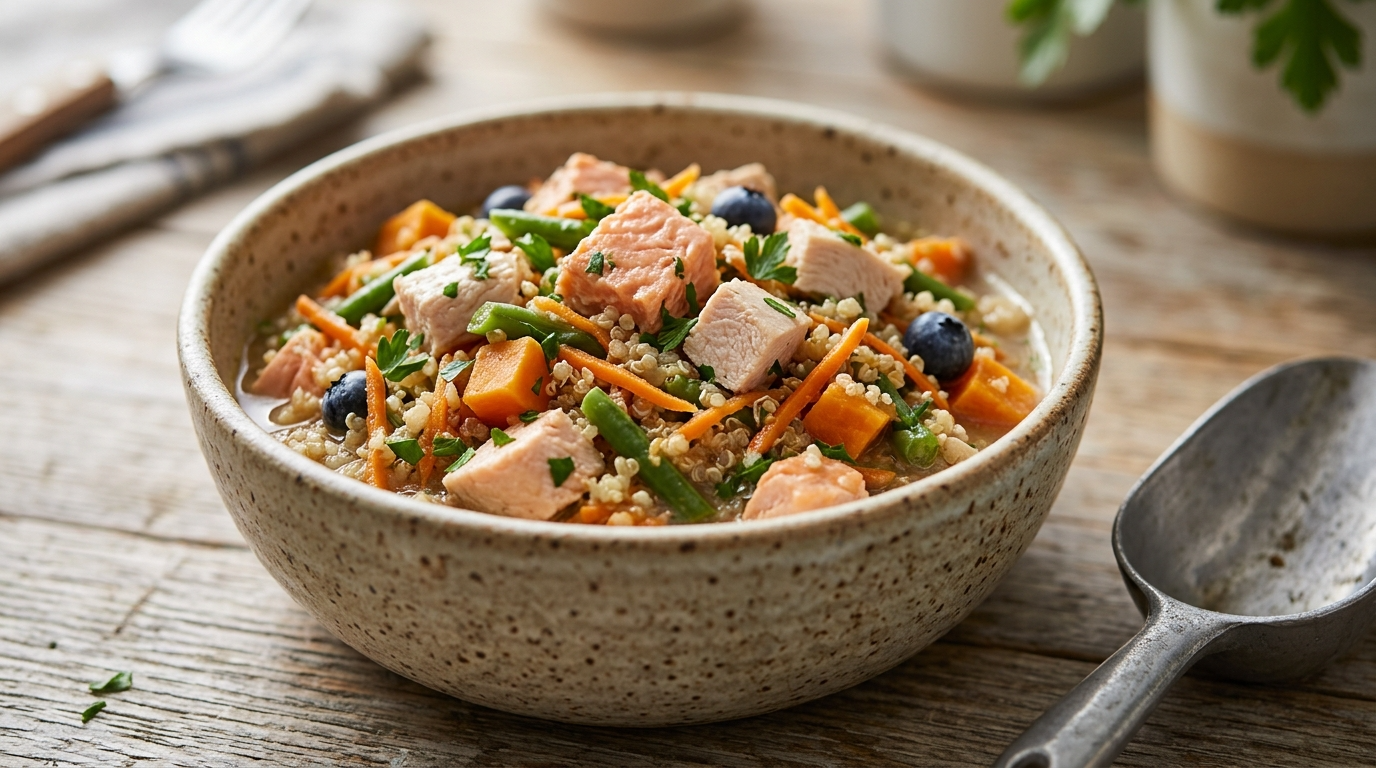
6 Heart-Healthy Dog Food Recipes for a Strong Heart
Last winter, my golden retriever, Cooper, started lagging during our morning walks. His usual pep was missing, and I realized his vitality depended on what I put in his bowl. I began researching how specific nutrients affect canine wellness, which led me to create these 6 heart-healthy dog food recipes for a strong heart.

This guide offers practical ways to prepare meals using wholesome ingredients like salmon, lean turkey, and fresh vegetables. By incorporating whole grains and eggs, you can provide balanced nutrition that supports your pet’s cardiovascular system. Always remember that these homemade options are meant to supplement a thoughtful lifestyle.
It is vital to consult your veterinarian before making significant changes to your companion’s diet. Ensuring complete nutrition remains the top priority while you explore these nourishing culinary ideas.
Key Takeaways
- Focus on lean proteins like turkey and chicken to maintain muscle mass.
- Include omega-3-rich salmon to support cardiovascular function.
- Integrate fresh vegetables and whole grains for essential fiber and vitamins.
- Always verify portion sizes with your local veterinarian.
- Prioritize fresh, whole ingredients over processed alternatives.
- Monitor your pet’s energy levels after introducing new meals.
What a Canine Heart Health Diet Should Provide
A good canine heart health diet is about the mix of nutrients, not just one thing. Many owners search for a single solution. But balanced nutrition is what keeps pets healthy for a long time. Giving your pet a variety of good foods ensures they get all the vitamins and minerals they need.
How balanced nutrition supports the heart, muscles, and circulation
The heart is a muscle that needs constant fuel to work well. Taurine, L-carnitine, and omega-3 fatty acids are key for strong heartbeats and good blood flow. When making homemade dog food for heart health, make sure these nutrients work together for the whole circulatory system.
Your dog also needs good protein for strong muscles. Strong muscles help the heart work less hard, making movement easier. A balanced dog health recipe means every meal helps your pet stay strong.
Why homemade meals should complement—not automatically replace—complete dog food
It’s tempting to only eat homemade meals, but it can miss important nutrients. Experts make dog foods to meet strict standards. Using homemade meals as a complementary topper adds fresh, healthy ingredients without risking a lack of nutrients.
Keeping a good commercial diet as the base is safe for your dog’s health. This way, your pet gets all the important trace minerals and vitamins. Always focus on nutritional consistency to keep your dog feeling great every day.
When a dog with heart disease needs a veterinarian-designed diet
If your dog has a heart condition, the diet needs to be different. A standard canine heart health diet might not be enough for complex medical needs. A vet must create a special diet that considers sodium, calories, and mineral balances.
Your vet can help find the right balance between heart-healthy foods and your dog’s medical needs. They will watch your pet’s weight and energy to keep the diet safe and effective. Never try to manage a heart condition with diet alone without professional veterinary guidance.
6 Heart-Healthy Dog Food Recipes for a Strong Heart
Making your dog’s food at home can be very rewarding. It helps their heart stay healthy. You need to pick the right ingredients for your dog’s needs.

How to choose recipes based on age, size, activity level, and health status
Every dog is different. Their food needs change as they grow. Puppies need more food than older dogs.
Active dogs need more food to keep them going. But, too much food can make them too heavy. This is bad for their heart. Always talk to your vet before changing your dog’s diet.
Heart-smart ingredients featured throughout the recipes
Good food for the heart uses whole foods. Recipes often include lean meats like turkey and chicken. These are full of good stuff without too much fat.
Fish with omega-3s are also used. They help fight inflammation. Foods like brown rice and carrots give energy and help with digestion. These foods make a strong base for your dog’s diet.
Important cautions about sodium, supplements, and nutritional balance
Homemade food is great, but it must be complete. Watch out for too much salt. It’s bad for your dog’s heart. Don’t add salt to their food.
Homemade food might miss some vitamins and minerals. You might need supplements. But, only add them if your vet says it’s okay. Keeping the food balanced is very important.
Salmon, Brown Rice, and Green Bean Bowl
Feeding your dog a homemade meal is rewarding. It uses heart-healthy ingredients for dogs. This recipe mixes lean protein with wholesome grains for your pup’s health.

Ingredients and heart-healthy nutrition benefits
This recipe has high-quality ingredients for heart health. Fresh, whole foods give your dog the best fuel for their day.
Salmon for omega-3 fatty acids
Salmon is the main protein in this bowl. It’s full of omega-3 fatty acids. These acids help with circulation and reduce inflammation.
Brown rice and green beans for fiber and energy
Brown rice gives your dog steady energy. Green beans add fiber for a full feeling and healthy digestion.
Preparation and cooking directions
Begin by cooking the salmon. You can poach or bake it. Make sure to remove all bones and skin to avoid choking or digestive issues.
Cook brown rice as directed, without salt or seasonings. Steam green beans until tender. Then, chop them into small pieces for your dog.
Safe serving sizes and storage guidance
Adjust portion sizes based on your dog’s weight and activity. Always check with your vet for the right caloric amount.
Keep leftovers in an airtight container in the fridge for up to three days. Freeze portions for longer storage. This way, you always have heart-healthy ingredients for dogs for a quick, nutritious meal.
Lean Turkey, Oat, and Pumpkin Stew
Making a healthy meal for your dog is simple with this turkey and pumpkin stew. It’s a top nutritious dog food recipe. It has lean protein and fiber for your pet’s health.

Ingredients that support lean protein and digestive health
This meal uses quality, simple ingredients good for your dog’s stomach. Whole foods give your dog optimal nutrition without bad additives.
Low-fat turkey as a protein source
Lean ground turkey is a great protein source. It’s low in fat, which is good for your dog’s heart. It helps keep muscles strong without too many calories.
Plain pumpkin and oats for fiber
Plain pumpkin is full of fiber for digestion and feeling full. Oats add energy slowly. Make sure to use plain, canned pumpkin, not pie filling.
Step-by-step cooking method
Start by browning the turkey in a non-stick pan until it’s done. Drain any extra fat. Then, add water or low-sodium broth, oats, and pumpkin. Simmer for 10 to 15 minutes until the oats are soft.
How to adjust the texture for puppies and senior dogs
For puppies or senior dogs, adjust the stew’s texture. Add more water or broth for a softer mix. Or, mash the turkey and oats with a fork for easier chewing.
Chicken, Quinoa, and Vegetable Medley
Making homemade pet meals for heart health is a great way to help your dog stay healthy. You can use fresh, whole foods to give your pet a better diet than kibble. This keeps them feeling their best.

Heart-healthy ingredients and their nutritional roles
Each part of this mix helps keep your dog’s heart healthy. By making these meals, you give your dog good food without bad additives.
Skinless chicken for lean protein
Skinless chicken breast is the main protein in this recipe. It has the amino acids your dog needs for muscles. It also has less fat, which is good for the heart.
Quinoa, carrots, and zucchini for nutrients and fiber
Quinoa is a smart choice for a grain, offering protein and minerals. Carrots and zucchini add antioxidants, vitamins, and dietary fiber. These help with digestion and overall health.
How to cook and combine the ingredients
First, cook the chicken until it’s done, then shred it. Cook the quinoa as directed, making it soft and easy to eat.
Steam the carrots and zucchini until they’re tender. Then, chop them finely. Mix all the ingredients in a big bowl. This ensures every bite has the right mix of nutrients.
Portion and calorie considerations for smaller dogs
Even with healthy foods, homemade pet meals for heart health need to be the right size. Smaller dogs need fewer calories to avoid weight gain. Too much weight can hurt their heart.
| Ingredient | Role | Preparation Method |
|---|---|---|
| Skinless Chicken | Lean Protein | Poached & Shredded |
| Quinoa | Complex Carbs | Boiled until fluffy |
| Carrots/Zucchini | Fiber & Vitamins | Steamed & Diced |
| Serving Size | Calorie Control | Adjust by weight |
Always talk to your vet about how many calories your dog needs. Use a kitchen scale to keep the portions right. This helps your pet stay healthy and at a good weight.
White Fish, Sweet Potato, and Pea Mash
White fish is a great choice for heart-healthy pet food. It’s mild and packed with good stuff. It’s perfect for dogs that need easy-to-digest food but still get all the nutrients they need.

Why lean white fish can fit a heart-conscious meal plan
Choosing boneless cod or pollock
Lean white fish like cod or pollock is full of good protein. It has less fat than red meat. This makes it great for keeping your dog’s heart healthy and helping them stay at a good weight. Make sure to buy fresh or frozen fillets without bones.
Using sweet potato and peas without overloading calories
Sweet potatoes are full of fiber and vitamins. They help with digestion and energy. Peas add more nutrients. Use one part fish to one part veggies to keep calories in check.
Preparation instructions and bone-safety checks
Start by cooking the fish until it’s soft and flakes easily. Check the meat for bones. If you find any, they can be harmful. Then, steam the sweet potatoes and mash them with peas.
Serving suggestions for dogs that prefer soft food
This mash is great for older dogs or those with sensitive teeth. You can make it smooth or a bit chunky. Serve it warm but not too hot. This makes it smell better and helps your dog eat more.
| Ingredient | Preparation Method | Primary Benefit |
|---|---|---|
| White Fish | Steamed/Poached | Lean Protein |
| Sweet Potato | Boiled/Mashed | Fiber & Vitamins |
| Green Peas | Steamed | Plant-based Nutrients |
Beef, Barley, and Vegetable Heart-Smart Skillet
Many pet owners like to make special meals for their dogs. This recipe is a tasty way to add variety to your dog’s diet. But remember, it’s best as an occasional treat, not a full diet.
Selecting lean ground beef and trimming excess fat
Choosing the right protein is key. Pick lean ground beef, 95% lean or higher, to cut down on fat. Before cooking, remove any white fat from the meat.
Ingredients that add protein, fiber, and beneficial nutrients
A good meal has quality proteins and complex carbs. Mixing lean beef with grains and veggies makes a meal that’s both filling and full of nutrients.
Barley as a fiber-rich carbohydrate
Barley is great for energy because it’s full of soluble fiber. It’s also packed with minerals, making it good for your dog’s heart.
Unsalted vegetables suitable for dogs
Add fresh, unsalted veggies like carrots and green beans to boost vitamins. Make sure they’re cooked soft for easy digestion. Don’t add salt, onions, or garlic as they’re bad for dogs.
Cooking directions and safe fat-removal techniques
Brown the lean beef in a non-stick skillet over medium heat. Drain the fat and mix the cooked beef with boiled barley and steamed veggies. Stir gently until everything is warm and well mixed.
How to keep this recipe as an occasional meal or topper
This recipe is not a full diet because it lacks some vitamins and minerals. Use it as a tasty topper or a special weekend meal. Always check with your vet to make sure it’s safe for your dog’s heart health diet.
| Ingredient | Primary Benefit | Preparation Tip |
|---|---|---|
| Lean Ground Beef | High-quality protein | Trim all visible fat |
| Pearl Barley | Soluble fiber | Boil until very tender |
| Carrots | Beta-carotene | Steam or boil plain |
| Green Beans | Low-calorie fiber | Remove ends and chop |
Egg, Brown Rice, and Spinach Breakfast Bowl
Starting your morning with nutritious dog food recipes is great for your pet’s health. This simple breakfast bowl has high-quality protein and gentle fiber. It keeps your dog happy and full all day.
How eggs provide protein while keeping the recipe simple
Eggs are an excellent source of protein for dogs. They have amino acids that help muscles and the heart. They don’t add extra bulk to your dog’s diet.
Preparing spinach and rice safely for dogs
Brown rice gives steady energy, and spinach has important vitamins and minerals. Make sure the rice is soft and the spinach is steamed or wilted. This makes it easy for your dog to digest.
Using plain, fully cooked eggs
Always give your dog fully cooked eggs to avoid salmonella. Don’t add oils or fats. Keeping it plain is best for your dog’s heart.
Avoiding butter, salt, onion, and garlic
It’s crucial to avoid human seasonings. Butter, salt, onions, and garlic can harm your dog’s heart. Never add them to their food.
Assembly instructions and practical serving ideas
To make it, mix cooked brown rice, wilted spinach, and one scrambled egg. You can serve it alone or as a nutritious topper for kibble.
When this recipe may not suit dogs with specific medical conditions
This meal is healthy for many dogs. But dogs with kidney disease or food allergies might need a special diet. Always talk to your vet before trying new foods.
| Ingredient | Primary Benefit | Preparation Method |
|---|---|---|
| Eggs | High-quality protein | Scrambled plain |
| Brown Rice | Complex carbohydrates | Boiled until soft |
| Spinach | Vitamins and fiber | Steamed or wilted |
Chicken, Lentil, and Carrot Comfort Meal
If you’re searching for dog health recipes, try this chicken and lentil dish. It’s a great way to give your pet a warm, homemade meal. This meal is full of nutrients that keep your dog healthy.
Heart-conscious ingredients for a filling homemade pet meal
Lean chicken and properly cooked lentils
Lean chicken is packed with protein, which is key for strong muscles. Adding lentils makes the meal rich in fiber. This keeps your dog full and happy.
Carrots and low-sodium broth alternatives
Carrots add sweetness and beta-carotene to the dish. Use low-sodium broth or water instead of salty stocks. This keeps the meal safe for your dog’s heart.
Cooking instructions for tender, digestible portions
First, boil the chicken until it’s tender. Then, shred it into small pieces. Cook the lentils and carrots in your broth until they’re soft. Make sure the ingredients are soft for easy digestion.
How to introduce legumes without causing digestive upset
Legumes are good for dogs, but introduce them slowly. Sudden changes can upset a sensitive stomach.
Begin by adding a little lentil mix to your dog’s food over days. This slow introduction helps their stomach adjust. Watch for any signs of upset and slow down if needed.
Heart-Healthy Ingredients for Dogs to Use and Avoid
Choosing the right ingredients is key for homemade dog food that’s good for the heart. Many foods are great for nutrition, but some are better than others for heart health. Always remember, balance is key when making meals at home.
Beneficial ingredients for homemade dog food for heart health
Heart-healthy ingredients give dogs the fuel they need for strong circulation and muscles. These should be fresh, not processed too much, and keep their natural nutrients.
Omega-3-rich fish and safe fish oils
Fish like salmon and sardines are full of omega-3 fatty acids. These fats help fight inflammation and keep the heart healthy. Always check with your vet before adding fish oil supplements.
Fiber-rich vegetables, whole grains, and moderate carbohydrates
Vegetables like carrots, green beans, and spinach help keep dogs at a healthy weight. This is good for the heart. Whole grains like quinoa and brown rice give energy without causing blood sugar spikes. They’re better than the refined fillers in many commercial foods.
Ingredients that can undermine a canine heart health diet
Even healthy foods for humans might not be good for dogs. Some can even harm their heart health or interact with medication.
High-sodium foods, processed meats, and fatty leftovers
Dogs with heart issues should avoid foods high in sodium. These can cause fluid retention and high blood pressure. Stay away from processed meats, canned veggies with salt, and fatty table scraps. They’re often high in salt and unhealthy fats that can negatively impact heart health.
Onions, garlic, grapes, raisins, xylitol, and other toxic foods
Some foods are toxic to dogs. Onions and garlic can harm red blood cells. Grapes and raisins can cause kidney failure. Xylitol, an artificial sweetener, is very dangerous and can drop blood sugar levels dangerously low.
| Category | Recommended | Avoid |
|---|---|---|
| Proteins | Fresh Salmon, Turkey | Processed Deli Meats |
| Vegetables | Green Beans, Spinach | Onions, Garlic |
| Grains | Quinoa, Brown Rice | Refined White Flour |
| Additives | Fish Oil (Vet-approved) | Xylitol, Excess Salt |
By choosing the right ingredients, you can make a safe and healthy diet for your dog. Always pick fresh, whole foods. Make sure to check with your vet before adding new foods to make sure they’re right for your dog.
Portions, Preparation, Storage, and Nutritional Balance
Keeping your pet healthy means watching their food portions and safety. Even with the best ingredients, the right calorie amount is key for a healthy weight. Consistency is crucial when making heart-healthy pet food at home.
Calculating portions without encouraging excess calories
To avoid weight gain, figure out your dog’s calorie needs. Use a digital kitchen scale for accurate measurements. This way, your dog gets the right nutrients without extra calories.
Safe cooking, cooling, refrigeration, and freezing practices
Safe handling of homemade meals is important. Cook proteins to the right temperature to kill bacteria. Cool the food fast in shallow containers before refrigerating.
Freeze portions for later use. When reheating, make sure the food is evenly warm. This keeps your heart-healthy pet food fresh and nutritious.
| Action | Best Practice | Safety Benefit |
|---|---|---|
| Cooling | Use shallow pans | Prevents bacterial growth |
| Refrigeration | Store below 40°F | Maintains ingredient quality |
| Freezing | Airtight containers | Prevents freezer burn |
| Reheating | Warm to room temp | Protects sensitive mouths |
Why calcium, vitamins, and minerals may require veterinary guidance
Homemade diets might lack calcium, phosphorus, and trace minerals. Without a vet’s help, your dog could get sick. It’s crucial to get a vet’s advice to ensure your recipes are balanced.
Using a veterinary nutritionist to formulate long-term meals
A vet nutritionist can check your recipes for balance. They suggest supplements to fill any gaps. This expert advice is the safest way to feed your dog heart-healthy pet food for a long time.
Keep homemade food to a topper or partial diet when appropriate
If you’re not ready for a full homemade diet, use your recipes as a topper. Adding a bit of fresh food to commercial food adds variety. This way, you can enjoy home cooking without risking your dog’s nutrition.
Moving Your Dog to Homemade Heart-Smart Meals Safely
Switching to a canine heart health diet smoothly is key. Changing food too fast can upset your dog’s stomach. This is not good when you’re trying to help their health.
Gradually transitioning over several days
Start adding new homemade meals slowly over seven to ten days. Begin by mixing a little new food with their old kibble. Then, slowly add more new food and less old food.
This slow change helps your dog’s stomach get used to new foods. If your dog seems uncomfortable, slow down the change even more.
| Days | Old Food Ratio | New Homemade Food |
|---|---|---|
| 1-3 | 75% | 25% |
| 4-6 | 50% | 50% |
| 7-9 | 25% | 75% |
| 10+ | 0% | 100% |
Monitoring weight, stool quality, appetite, energy, and coughing
Watch your dog closely after starting the canine heart health diet. Make sure they’re not gaining or losing too much weight. Keeping a healthy weight is important for their heart.
Check their stool often. Loose or hard stools mean the new food might not be right. Also, watch their energy and appetite. A drop in either could mean the diet needs tweaking.
Keep an eye on coughing too. If coughing gets worse, tell your vet. This is important, even if it’s just at night or after exercise.
Signs that require a prompt veterinary appointment
Most dogs do well with homemade meals, but some signs are serious. If your dog shows signs of trouble, don’t ignore them.
Breathing difficulty, fainting, weakness, or sudden abdominal swelling
If your dog has trouble breathing, get help right away. Fainting, weakness, or sudden belly swelling are also big warnings. They mean your dog’s heart might be under too much stress.
Questions to ask the veterinarian about heart-healthy pet food
When you see your vet, have questions ready. Make sure your canine heart health diet is just right for your pet. Ask about the right calories for their heart condition.
Find out if you need to add special minerals or vitamins. Also, ask how often to check in with your vet to see how the new diet is working.
Conclusion
Feeding your dog high-quality foods like salmon, lean poultry, and fresh veggies is key. These foods give your dog the vitamins and minerals they need. They help keep your dog’s heart strong.
When making homemade meals for your dog’s heart, watch the portion sizes and calories. These recipes are great additions to their diet. But, they should not be the only thing they eat without a vet’s advice.
Every dog is different. They need food based on their age, how active they are, and any health issues they have. Choosing the right recipe for your dog helps their heart and energy.
Always talk to your vet before changing your dog’s diet. A vet can make sure your homemade meals are good for your dog. Taking care of your dog’s diet can really improve their life.


