
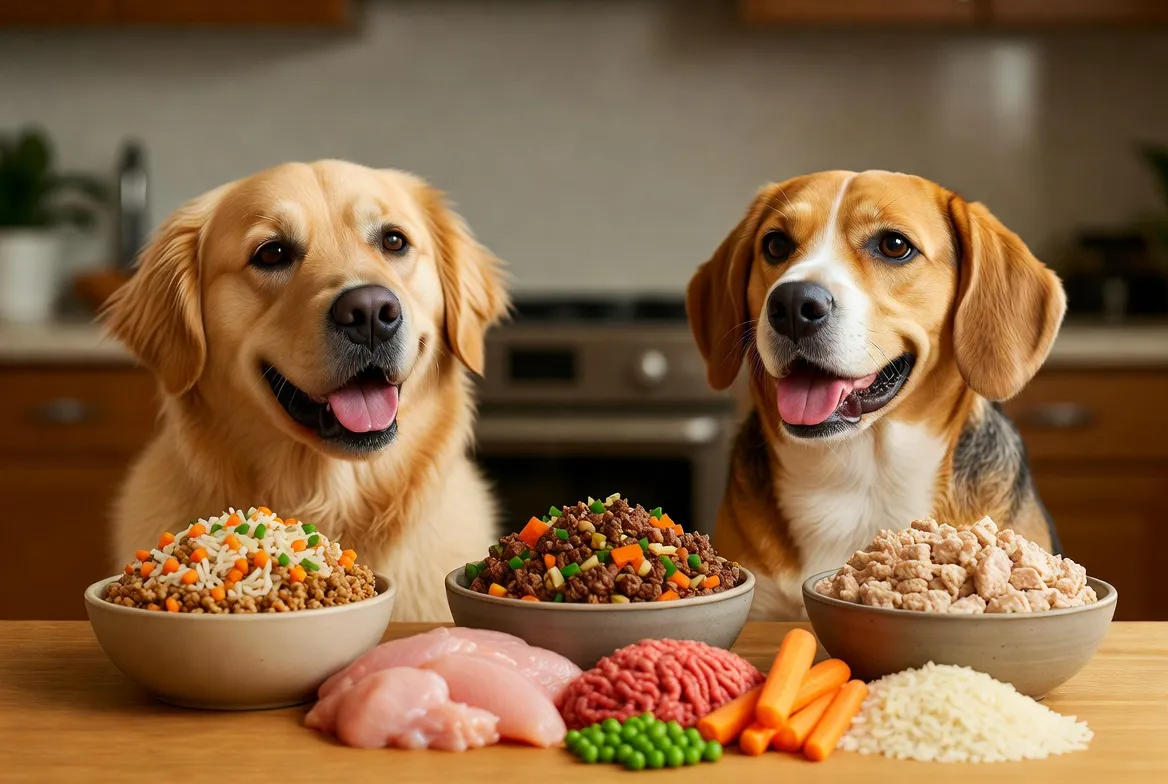
5 Easy Homemade Dog Food Recipes for Beginners Made Simple
Last month, I stared at a bag of kibble, wondering if my golden retriever was getting the right nutrients. Many pet parents feel the same way. They want to give their pets better health by avoiding processed foods.
This simple choice changed our daily life into a rewarding experience. It brought us closer together.

By making meals at home, you can pick fresh, healthy ingredients. This way, you know exactly what your pet eats. Choosing 5 easy homemade dog food recipes for beginners means better nutrition and saving money.
Switching to fresh food is easier than you think. This guide will teach you about dog nutrition. You’ll see your pet flourish with these healthy, affordable meals. It shows how much you care.
Why You Should Consider Homemade Dog Food
Choosing what goes into your dog’s food is key. Many are switching from kibble to homemade pet food. This way, you give your dog the best nutrients without bad stuff.
Understanding the Benefits of Fresh Ingredients
Using whole, unprocessed foods is best for your dog. Owners say their pets have more energy. Plus, a diet full of fresh foods makes their coat shiny and skin healthy.
Another plus is better digestion. You can avoid foods that upset their stomach. Your dog will also enjoy the taste and texture of real food more.
“Let food be thy medicine and medicine be thy food.”
Common Misconceptions About Cooking for Pets
Some think making dog food at home is too pricey or time-consuming. But you can make dog food recipes affordably with seasonal produce and bulk proteins. Planning makes it easy to cook meals for days.
Another myth is you need a degree to feed your pet right. While balance is important, simple guidelines make it easy. You don’t have to be a pro chef to make wholesome, delicious meals for your dog.
Essential Nutritional Guidelines for Your Dog
Getting the right nutrients is key when making homemade dog food. Knowing how different foods work together is crucial for your pet’s health. Quality food ensures your dog stays healthy at every stage of life.

Balancing Proteins, Fats, and Carbohydrates
A healthy meal needs the right mix of nutrients. Proteins help keep muscles strong. Fats give energy for play. Carbohydrates provide fiber and steady energy for digestion.
When trying simple dog food recipes, aim for a balanced mix. Remember, puppies and senior dogs have different needs. Adjusting the mix ensures your pet gets what they need to stay healthy.
Safe and Toxic Foods to Avoid
Not all foods are safe for dogs. Some common foods can harm your pet. It’s crucial to avoid these foods when cooking.
Here are some foods to avoid:
- Grapes and raisins, which can cause kidney failure.
- Onions and garlic, harmful to red blood cells.
- Chocolate, dangerous due to stimulants.
- Xylitol, found in sugar-free products.
- Macadamia nuts, can cause weakness and tremors.
The Importance of Consulting Your Veterinarian
Before changing your dog’s diet, see your vet. They can assess your dog’s needs based on breed, age, and health. A vet’s advice ensures your homemade dog food is complete and safe.
Your vet can also spot allergies or sensitivities. Expert advice makes following simple dog food recipes easier. Your dedication to your dog’s health is the best gift.
5 Easy Homemade Dog Food Recipes for Beginners
It’s easy to make healthy meals for your dog. Just a few simple steps can help you make 5 easy homemade dog food recipes for beginners quickly. You won’t need to spend hours cooking every day.
Tips for Successful Meal Prep at Home
Being efficient is key to a regular feeding schedule. Set aside one afternoon a week for batch cooking. This saves time and keeps your dog’s meals healthy and ready.
- Wash and chop all vegetables at once to save prep time.
- Use a slow cooker to prepare large batches of protein.
- Keep your kitchen workspace clean to avoid cross-contamination.
- Measure your portions before you start cooking to ensure balance.
Storing and Freezing Your Homemade Batches
Storing food properly keeps it fresh and safe for your dog. Cool your meals, then divide them into portions in airtight containers or freezer-safe bags. Labeling each container with the date makes it easy to check freshness.
Keep a three-day supply in the fridge for quick use. For longer storage, freeze the rest. Thaw a portion in the fridge overnight to keep your dog’s food at its best.
Selecting High-Quality Ingredients on a Budget
You don’t have to spend a lot to feed your dog well. Many beginner dog food recipes use simple, affordable ingredients. Look for seasonal produce and buy proteins in bulk to save money.
- Look for sales on lean ground meats or poultry.
- Buy frozen vegetables, which are often just as nutritious as fresh ones.
- Purchase grains like brown rice or quinoa in larger, cost-effective bags.
- Check local farmers’ markets for affordable, seasonal produce options.
Recipe One: The Balanced Chicken and Rice Bowl
Starting your journey into homemade dog food recipes begins with this reliable and easy-to-digest meal. This classic combination is perfect for dogs with sensitive stomachs or those who are just beginning their transition to fresh, home-cooked nutrition.

Ingredients You Will Need
To prepare this wholesome meal, you only need a few simple, high-quality items. Make sure all ingredients are fresh to give the best nutrition to your furry friend.
- 1 pound of boneless, skinless chicken breast
- 2 cups of cooked white rice
- 1/2 cup of steamed carrots, finely chopped
- 1 tablespoon of olive oil or coconut oil
Step-by-Step Preparation Instructions
Cooking for your pet should be a stress-free experience. Follow these steps to ensure the chicken is cooked thoroughly and the rice is soft enough for easy digestion.
- Boil or poach the chicken breast in water until it is fully cooked and no longer pink in the center.
- Shred the chicken into small, bite-sized pieces to prevent any choking hazards.
- Cook the white rice according to the package instructions, ensuring it is slightly overcooked to make it gentle on the digestive tract.
- Combine the shredded chicken, cooked rice, and steamed carrots in a large bowl, then stir in the oil for healthy fats.
Serving Sizes Based on Your Dog’s Weight
Finding the right portion is essential when you explore easy dog food recipes. While every dog is unique, you can use this general guide to determine how much to serve based on your pet’s weight and activity level.
| Dog Weight | Daily Serving Amount |
|---|---|
| 10-20 lbs | 1 to 1.5 cups |
| 21-40 lbs | 2 to 3 cups |
| 41-60 lbs | 3.5 to 4.5 cups |
Always monitor your dog’s weight and adjust these portions as needed. If your dog is highly active, you may need to increase the serving size slightly to maintain their energy levels.
Recipe Two: Beef and Sweet Potato Power Meal
Want a hearty meal for your dog? Try beef and sweet potatoes. This nutrient-dense mix gives your dog protein and carbs for energy all day.
Why Beef and Sweet Potato Work Well Together
Beef is great for muscle maintenance and strength. Sweet potatoes add fiber and vitamins for healthy digestion.
This combo is common in homemade dog food recipes. It gives lasting energy. The potatoes’ fiber keeps blood sugar steady, avoiding energy drops.
Preparation Methods for Optimal Nutrient Retention
Use gentle cooking to keep nutrients in your food. Steam or boil sweet potatoes to keep vitamins. Brown the beef for flavor and safety.
Don’t overcook veggies to keep minerals. Short cooking times keep your homemade pet food healthy for your dog.
Adding Healthy Fats for a Shiny Coat
Healthy fats are key for skin and coat health. Add a teaspoon of fish oil or ground flaxseed after cooling.
These fats add essential omega-3 fatty acids for a shiny coat. Adding them last keeps nutrients high in your homemade pet food.
Remember, consistency is important when switching to homemade dog food. Start with small portions to ensure your dog likes it and can digest it well.
Recipe Three: Turkey and Vegetable Medley
Managing your dog’s weight doesn’t mean they have to miss out on taste. This turkey-based dish is a fantastic lean protein option for pets looking to lose weight. It’s one of the best simple dog food recipes for keeping your pup full and lively.

Selecting the Best Vegetables for Digestion
Picking the right veggies is key for your dog’s health. Carrots and green beans are great because they’re full of essential antioxidants and fiber. They help with digestion and keep your dog happy all day.
Make sure to cut the veggies into small pieces to avoid choking. Steaming them lightly keeps their nutrients and makes them easier to digest. This is a key part of many recipes for dogs focused on health.
Cooking Techniques for Lean Turkey
Turkey is lean, so it can dry out if cooked too long. To keep it moist, poach it in a bit of water or low-sodium broth. This way, you don’t need to add extra fats or oils, which is crucial for weight management.
Don’t add onions, garlic, or strong seasonings to the meat. Keep it simple and safe for your pet. Once cooked, shred the turkey into small pieces to mix well with the veggies.
How to Incorporate Essential Vitamins
Even the best homemade meals might need a little extra. Talk to your vet about adding a high-quality canine multivitamin to your simple dog food recipes. This ensures your dog gets the minerals they need for a healthy coat and immune system.
You can also add natural nutrients like kelp or ground flaxseed. Always add new supplements slowly to see how your dog reacts. With the right mix, this turkey medley becomes a nutritionally complete feast your dog will love.
Recipe Four: Lean Ground Pork and Quinoa Feast
If you’re looking for healthy beginner dog food recipes, try this lean ground pork and quinoa feast. It’s full of protein and carbs to keep your dog active all day. Plus, it’s easy to make and your pet will love it.
The Benefits of Quinoa as a Grain Alternative
Quinoa is a fantastic gluten-free grain that’s good for your dog. It has all the amino acids they need. It also has minerals like magnesium and iron for health. Adding quinoa to your dog’s diet is a smart move.
“Good nutrition is the foundation of a happy, healthy life for every dog, and fresh ingredients make all the difference.”
Preparing Pork Safely for Your Pet
When cooking pork, safety is key to make sure it’s fully cooked. Stay away from harmful ingredients like onions, garlic, or too much salt. Cook the ground pork until it’s hot all the way through to kill bacteria.
To keep your beginner dog food recipes safe, follow these simple steps:
- Brown the lean ground pork in a non-stick pan without adding oils.
- Drain any excess fat to keep the meal light and digestible.
- Ensure the meat is cooked through with no pink remaining.
- Rinse the quinoa thoroughly before boiling to remove its natural bitter coating.
Flavor Enhancements Your Dog Will Love
Even the pickiest eaters love this mix when you add the right touches. Try adding a bit of fresh parsley or basil. These herbs add antioxidants and a nice smell. They make the meal feel like a special treat without being hard to make.
Recipe Five: Fish and Pumpkin Digestive Support
Learn how fish and pumpkin can make your dog’s meals better. This mix is great for pets with upset stomachs. It uses simple, whole foods for gentle nutrition.
Using Pumpkin to Soothe Sensitive Stomachs
Pumpkin is great for dogs’ digestive health. It has soluble fiber that helps with bowel movements. Adding plain, cooked pumpkin can calm the gut.
Make sure to use plain pumpkin, not pie filling. Pie filling has spices and sugars that are bad for dogs. A little pumpkin in their meal can help a lot.
Choosing Safe Fish Varieties for Dogs
Fish is good for dogs because of omega-3 fatty acids. These acids help the coat and reduce inflammation. Choose low-mercury fish like wild-caught salmon, cod, or whitefish.
Remove bones before cooking to avoid choking hazards. Steaming or poaching keeps nutrients without extra fats.
Quick Cooking Tips for Busy Pet Owners
Don’t spend hours cooking for your dog. Cooking a big batch of fish and pumpkin on the weekend is smart. Portion and freeze for later.
- Steam fish in bulk to save time.
- Freeze pumpkin in pre-portioned molds.
- Thaw meals in the fridge overnight.
- Add fresh ingredients before serving.
Plan ahead for your dog’s healthy meals. These simple habits make caring for your pet easy and rewarding.
Conclusion
Switching to homemade meals is a great choice. It lets you give your dog the best nutrition. You now know how to make healthy meals for your pet.
These easy recipes for dogs help you control what they eat. You can be sure your pet eats only the best food every day.
Watch how your dog’s energy and coat change with these new meals. It’s also important to keep up with vet visits. This helps make sure your pet gets the right nutrients for their age.
Trying new ingredients can make your bond with your dog even stronger. Share your favorite recipes with other pet owners. Your effort to make healthy meals for dogs really helps their health.


