
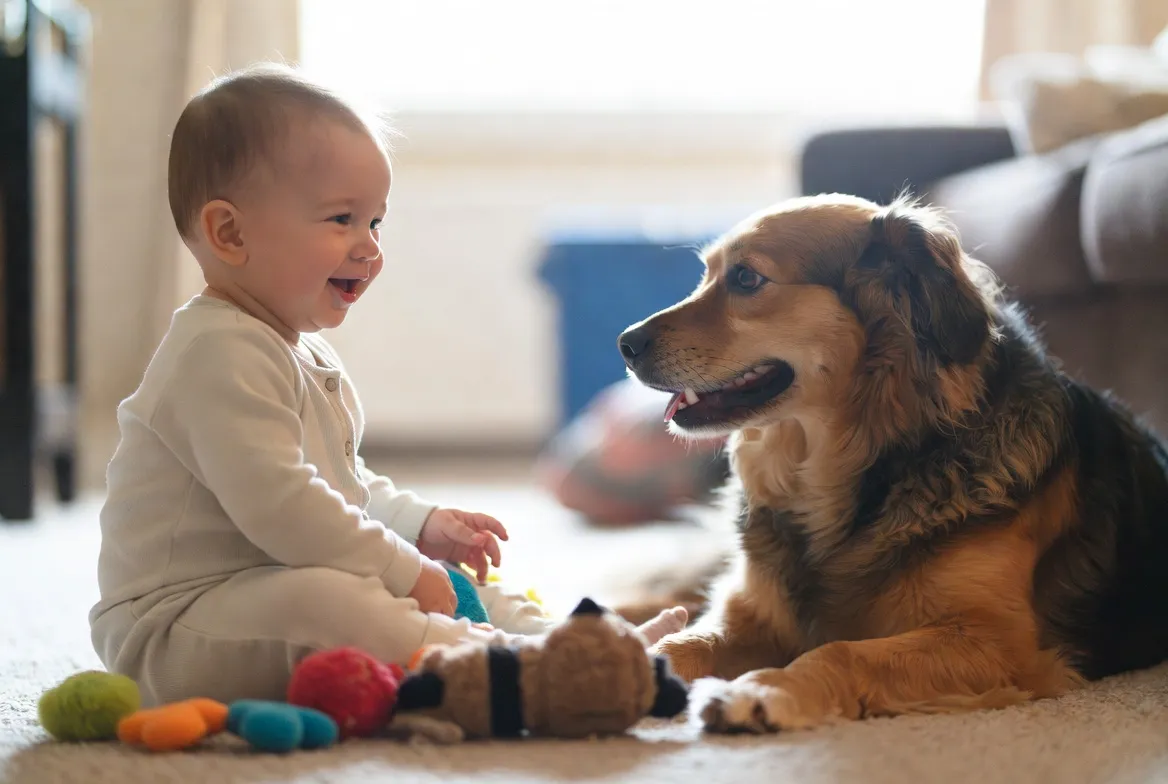
7 Survival Tips for Living With a Dog and a Toddler
Bringing home a new baby is exciting but also challenging. Adding a furry friend makes things even more interesting. You might feel both excited and tired as you start this journey. Finding harmony between your pet and your little one is possible.

Using 7 survival tips for living with a dog and a toddler can make life easier. This path needs patience, but the bond between your child and pet will be strong. It will be worth all the hard work.
You’ll learn to meet your child’s and pet’s needs. Setting realistic expectations from the start is key. This helps create a lasting, positive bond. Let’s see how to make a safe, happy space for everyone.
Setting the Stage for a Harmonious Home
Creating a peaceful home starts before your toddler and dog meet. Focus on proactive planning to avoid conflicts. This way, your home stays a safe space for all.
First, check your floor plan for dedicated zones. Strategic furniture placement keeps busy areas clear. This reduces the chances of your toddler and dog bumping into each other.
By giving each family member their own space, you lower everyone’s stress. This makes your home a happier place.
Simple steps can make your home calm. Use rugs to set boundaries or move chairs for open play areas. A tidy home is key to a happy dog and toddler.
7 Survival Tips for Living With a Dog and a Toddler
Successfully managing dog and toddler dynamics starts with a few key habits. Focus on being consistent to create a safe space for both. These 7 tips will help you live in harmony with your dog and toddler.
Establish Clear Boundaries and Safe Zones
Your dog needs a special place to go when they feel too much. This spot should be off-limits to your toddler. It makes your pet feel secure and respected.
Prioritize Consistent Training for Your Canine Companion
Practice basic commands like “sit,” “stay,” and “leave it” every day. A well-trained dog is easier to handle when you’re busy with your child.
Supervise Every Interaction Without Exception
Never leave your toddler and dog alone, not even for a second. Active supervision stops accidents and prevents problems before they start.
Teach Your Toddler Respectful Pet Etiquette
Show your child how to pet gently. Explain that ears, tails, and paws are sensitive. This teaches your toddler that dogs have feelings too.
Maintain Your Dog’s Exercise and Mental Stimulation Routine
A tired dog is a happy dog. Make sure your pet gets enough exercise and mental play. This stops boredom and bad behavior.
Keep Resources Separate to Prevent Guarding
Feed your dog in a quiet spot away from your toddler. Keep toys and food bowls out of reach. This stops fights over valuable things.
Create a Predictable Daily Schedule
Dogs love routine, and it makes them calm. A set schedule for walks, meals, and playtime keeps them calm. They won’t get anxious or upset during busy times.
Managing Daily Logistics and Household Flow
Having a dog and a toddler at home can be tough. But when you learn to manage them well, everyone feels better. A good routine helps keep things calm.

Streamlining Feeding Times and Locations
Feeding time is exciting for dogs but can scare toddlers. To keep things safe, always feed your dog in a separate room or behind a sturdy baby gate. This keeps your child away from the dog’s food bowl.
These dog and toddler living tips show how important it is to keep food safe. By not letting your child near, your dog can eat without feeling stressed. This lowers the chance of growling or snapping.
Handling Walks and Outings with a Toddler in Tow
Going for a walk with a toddler and a dog needs planning and the right tools. Use a hands-free leash or a sturdy stroller. Always make sure your toddler is buckled up first.
Good management of dog and toddler dynamics means choosing safe routes. Pick wide paths where your dog won’t feel crowded. Consistency is key for happy walks for everyone.
Recognizing Canine Body Language and Stress Signals
Understanding your pet’s subtle cues is key to keeping everyone safe. Learning to read these silent messages helps prevent accidents. Your dog shows their comfort level through posture, eyes, and mouth.
Identifying Subtle Warning Signs
Dogs usually don’t go straight to aggression without warning. Look for subtle indicators like lip licking, yawning when not tired, or showing the whites of their eyes. These are signs they feel overwhelmed or anxious.
Also, watch their body posture. A stiff, frozen body or a tucked tail means they’re uncomfortable. If you see these signs, change the environment right away.
Knowing When to Intervene and Separate
Being a proactive mediator is crucial in your home. If your dog shows stress, gently remove them to give them space. This simple act is a key tip for harmonious dog-toddler living.
Don’t wait for a growl or snap to act. By stepping in early, you show your dog you’re their trusted protector. This strengthens your bond. Make sure your toddler has a safe space to play while your dog has a quiet area.
Essential Gear for a Safe Coexistence
Keeping your dog and toddler apart is easier with the right gear. Quality equipment gives you peace of mind. It ensures everyone’s safety. These dog and toddler cohabitation tips help set up safe boundaries.

Utilizing Baby Gates and Playpens Effectively
Physical barriers are key when you can’t watch them. A strong baby gate keeps your dog calm and safe. Playpens also help keep your toddler in a safe area.
Here are some benefits of using these barriers:
- Flexibility: Pressure-mounted gates are easy to move.
- Visibility: Mesh or barred designs let your dog feel included.
- Security: Good latches stop toddlers from opening them.
- Versatility: Playpens fit different floor plans.
Choosing the Right Crates and Tethers
Your dog needs a safe place to go when it’s too loud. A crate is like a den for them. Make sure it’s big enough for them to move around.
Using tethers helps keep your dog close but still. A tether lets your dog stay with you without getting into your child’s space. Always watch your dog when they’re tethered to avoid problems.
Addressing Common Behavioral Challenges
Behavioral hiccups are normal when you learn how to live with a dog and a toddler. These moments can be tough, but they help you bond and set rules. Being consistent is key to keeping peace in your home.
Good dog and toddler household management means staying calm and acting fast. Fixing problems as they happen helps your dog know their place in your family. Remember, your dog is just trying to adjust to a busy new world, and they need your help.

Managing Resource Guarding and Toy Sharing
Resource guarding happens when a dog feels their favorite things are in danger. Teach your dog that sharing is good, not bad. Start with these easy steps:
- Always trade a high-value treat for the item your dog is holding.
- Practice “drop it” commands during calm play.
- Keep your toddler’s favorite toys away from your dog.
- Reward your dog for staying calm when your child is near.
Curbing Unwanted Jumping or Nipping
Jumping and nipping show excitement, but they’re not safe for kids. Teach your dog to stay calm to get attention. If they jump, ignore them until they calm down, then praise them.
Nipping comes from too much excitement or a need to herd. If your dog nips, give them a chew toy or a quiet spot. Consistency is vital. Make sure everyone in the family follows the same rules. With time, your dog will learn that gentle play gets more love.
Nurturing the Bond Between Your Child and Dog
Seeing your toddler and dog become close is very rewarding. Learning how to live with a dog and a toddler helps create a safe and loving home. This bond is built on trust that will last for years.
Encouraging Gentle Interaction and Play
Playtime is great for teaching your child to interact gently with your pet. Show them gentle touches and calm movements. Play games like rolling a ball or hide-and-seek to keep everyone happy.
If your dog wants space, use it as a teaching moment. Tell your child that respecting the dog’s space shows love. This keeps playtime positive for everyone.
Involving Your Toddler in Care Tasks
Getting your child involved in daily tasks is a smart move. It makes them see the dog as a family member. This helps your child feel empathy and responsibility.
Here are some ways to involve your child safely:
- Let them help put kibble in the dog’s bowl.
- Have them brush the dog with your help.
- Let them pick a toy for the dog to play with.
These small tasks make your child and dog closer. Always watch them to keep things safe and fun. This helps build a lifelong friendship based on kindness and understanding.
When to Seek Professional Help
Living with dogs and toddlers can be tough. You don’t have to face it alone. Getting help with best practices for dog and toddler coexistence is smart. It shows you care about your pet and child.
Identifying Red Flags in Behavior
Keep an eye on your dog’s mood. Small changes are okay, but big ones mean trouble. Always prioritize safety if you see these signs:
- Persistent growling or snapping when the toddler approaches.
- Stiff body posture or “whale eye” where the whites of the eyes are visible.
- Constant attempts to hide or escape from the child.
- Resource guarding that escalates despite your management efforts.
- Any history of biting or physical contact that causes injury.
Finding a Certified Professional Dog Trainer
Looking for help? Find a trainer who knows about families. They should know how to help your dog and child get along. Stay away from trainers who use harsh methods.
Look for a Certified Professional Dog Trainer (CPDT-KA) who uses positive methods. They reward good behavior, not punish bad behavior. A good trainer will make a plan just for your family. It will keep everyone safe and happy.
Conclusion
Your journey to a peaceful home is rewarding and grows stronger over time. You have the power to create a safe space for your child and pet to respect each other.
Using these best practices for dog and toddler coexistence makes you more confident every day. You build trust that helps everyone in your family.
Being consistent is key in managing your dog and toddler’s relationship. Small daily actions can make a big difference in your home’s harmony.
Focus on the good times you share each day. These moments create a strong bond that lasts for years.
You have the skills to keep your home happy by focusing on safety and clear communication. By following these best practices, your home will stay calm and joyful.
Share your experiences with other parents to build a supportive community. Your hard work makes a big difference in your family’s life.


